Over the last several years, I've worked hundreds of EB-2 National Interest Waiver and EB-1A extraordinary ability cases. And across all of them, one mistake keeps showing up more than any other: applicants pour their energy into the wrong piece of evidence.
They obsess over letters of recommendation. Who should write them, what they should say, how glowing they need to sound. Meanwhile, the evidence that actually moves the needle with USCIS sits underdeveloped, or gets treated as an afterthought.
That mistake didn't always cost as much as it does today. Here's what changed.
How adjudication standards have shifted
During the Biden administration, EB-2 NIW and EB-1A cases were being filed and approved at a high rate. That doesn't mean the government wasn't looking closely at the evidence; they were. Officers were still applying the Dhanasar framework for NIW cases and the Kazarian standard for EB-1A cases with real scrutiny. The legal standard never became easy.
What's changed is the environment around that standard. Since the end of the Biden administration, two things happened at once: the volume of EB-2 NIW and EB-1A filings grew substantially, and the Trump administration introduced tighter posture around employment-based self-petitions. The combination pushed USCIS to lean more heavily on one thing above all else: objective evidence.
This is not a change in the law. It's a change in how the law gets applied in practice, and if your case strategy hasn't adjusted with it, you're building on outdated assumptions.
What "objective evidence" actually means
When I talk about objective evidence, I mean documentation that proves a critical point in your case on its own, without needing someone else's opinion to back it up. Examples include:
- Measurable results tied directly to your work.
- Published work product that speaks for itself.
- Independent endorsements or recognitions you didn't ask anyone to write specifically for your petition.
- Reviews, citations, or metrics that a third party generated in the normal course of business, not for immigration purposes.
The common thread across all of these: they can be corroborated independently. An adjudicator doesn't have to take your word, or your recommender's word, for what happened. The evidence stands on its own.
The letters of recommendation myth
Here's what I see constantly from applicants: intense anxiety over letters of recommendation. Who should write them. What they should say. How many are enough.
I understand the instinct. Letters feel personal and controllable in a process that otherwise feels opaque. But in my experience, that anxiety is misplaced.
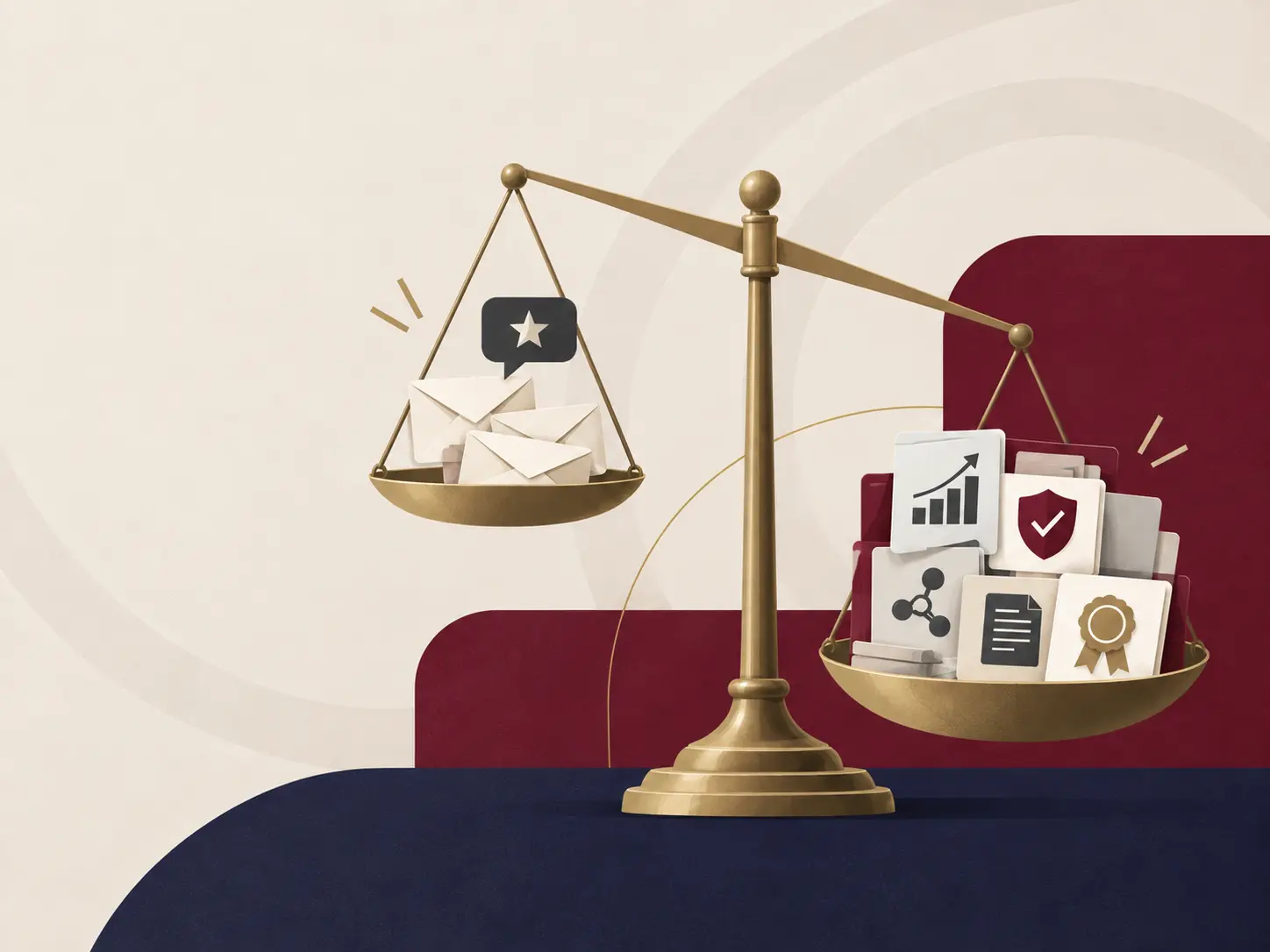
Letters of recommendation and testimonials are valuable. They help contextualize how something happened, and they can reinforce objective evidence that's already in the record. What they are not, at least not anymore, is the centerpiece of a strong case.
I have personally worked cases that were approved without a single testimonial. Cases built entirely on objective, independently verifiable evidence, without a recommendation letter in sight. That should tell you something about where the real weight lies.
Relying on testimonials alone, without the objective evidence to support them, is a losing strategy. It was a survivable one during a more permissive filing environment. It is not anymore.
Where my job as your attorney actually starts
This is the part most applicants don't expect from an immigration attorney: my role isn't just to file paperwork on your behalf. It's to sit down with you, understand your actual professional history, and identify what objective evidence already exists in your record, and just as importantly, what evidence you can still go generate before we file.
Sometimes that means identifying a metric you didn't realize was compelling. Sometimes it means suggesting a specific action you can take in the next few months, publishing something, securing a specific type of recognition, documenting a result you're already producing, that will materially strengthen your petition before it ever reaches an officer's desk.
That guidance is the difference between a case built reactively around whatever letters you can collect, and a case built strategically around evidence that speaks for itself.
If you're evaluating an EB-2 NIW or EB-1A petition and you're not sure whether your evidence is strong enough, that's exactly the conversation worth having before you file, not after you get a Request for Evidence. Send us a message, and let's take an honest look at what you already have and what we can still build.